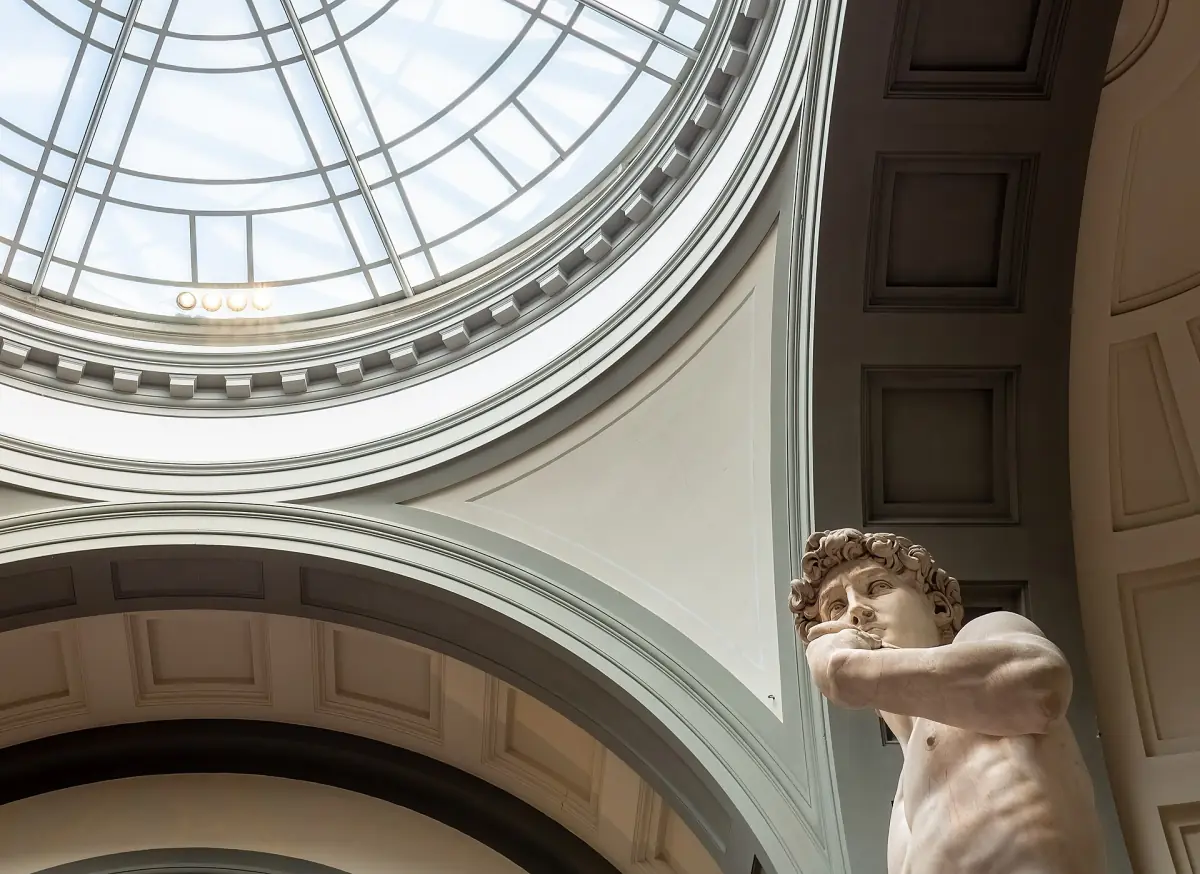
Michelangelo's David history in short
The story has three main stops. In 1501 the cathedral works board ordered a statue of David for the Duomo. In 1504 the statue was unveiled in front of the Palazzo Vecchio. In 1873 it was moved indoors to the Accademia to protect it from the weather, and it has stood there since.
The dates are worth keeping apart. 1873 is the year the statue moved. The Tribuna, the hall built for it, is dated to 1882. If you plan to see the statue today, Accademia Gallery tickets are the place to start.
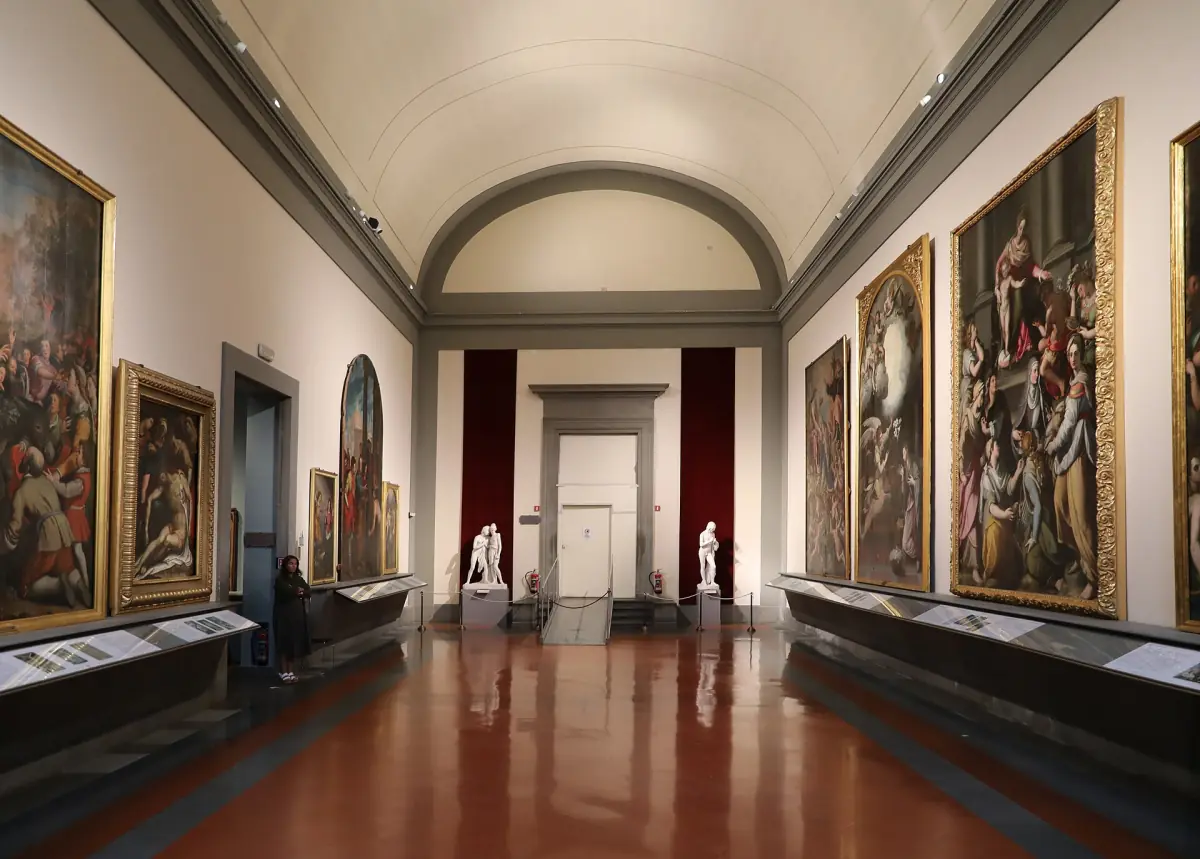
From the order to the unveiling, 1501 to 1504
Three dates cover the making of the statue.
16 August 1501: the order
The cathedral works board ordered the statue. It was meant for one of the outer buttresses of the Duomo, high on the building. The marble was not fresh: it had been worked on before.
Facts about the David →25 January 1504: the place
A committee that included Leonardo da Vinci and Botticelli met to decide where the finished statue should go. It chose a site in front of the Palazzo Vecchio instead of the cathedral.
8 September 1504: the unveiling
The David was shown to the public in front of the Palazzo Vecchio. For almost 370 years, from 1504 to 1873, it stood outdoors on the Piazza della Signoria.
Our pick: the story on a small-group tour
Our take: a licensed guide puts the statue's history in context in front of it.
Hand-picked tours, booked through GetYourGuide. Prices are indicative starting prices in euros (as of October 2026). Tap a tour for live availability and the current price in your currency.
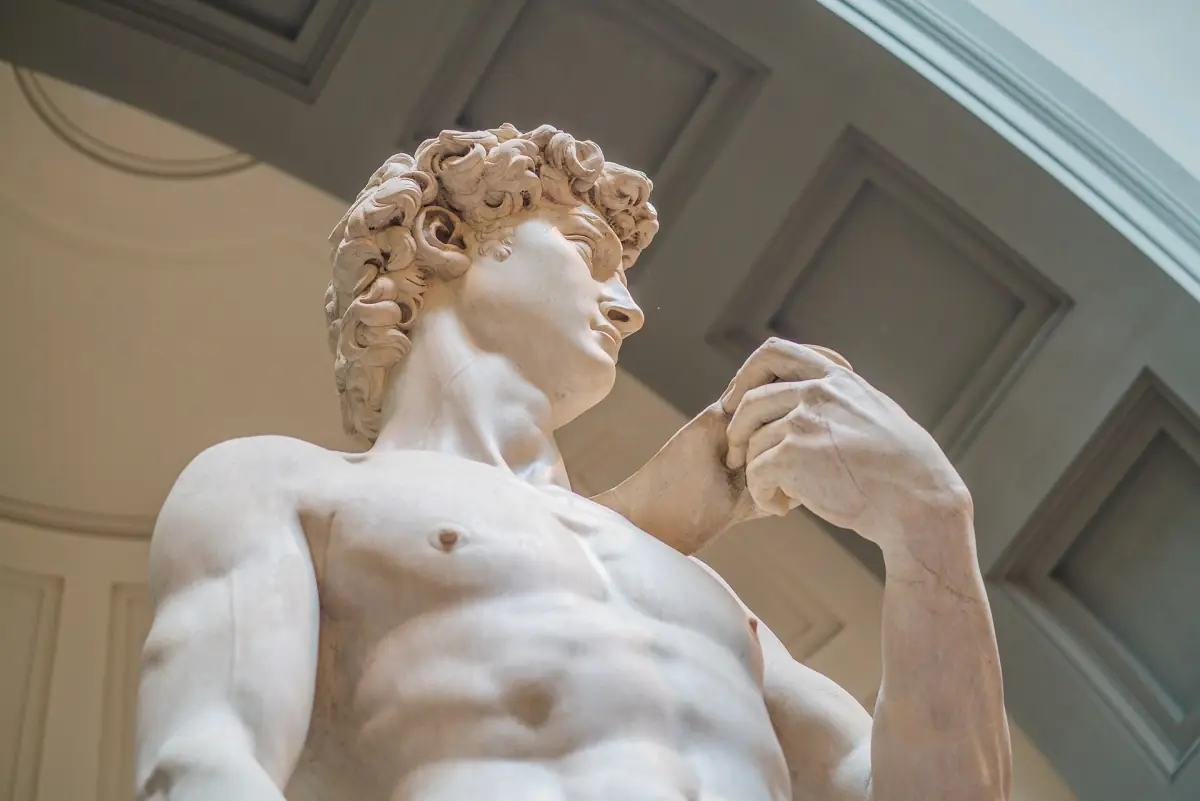
Tickets and guided visits to see the David
Time-slot tickets and guided tours of the Galleria dell'Accademia, with live prices and availability.
The block other sculptors left
The marble was already roughed out when Michelangelo received it. Agostino di Duccio and Antonio Rossellino had worked on it before and abandoned it. Michelangelo took the block over for the David.
The planned place changed too. The statue was meant for a high buttress of the cathedral and ended up on a public square. For the cathedral side of the story, see the history of the cathedral.
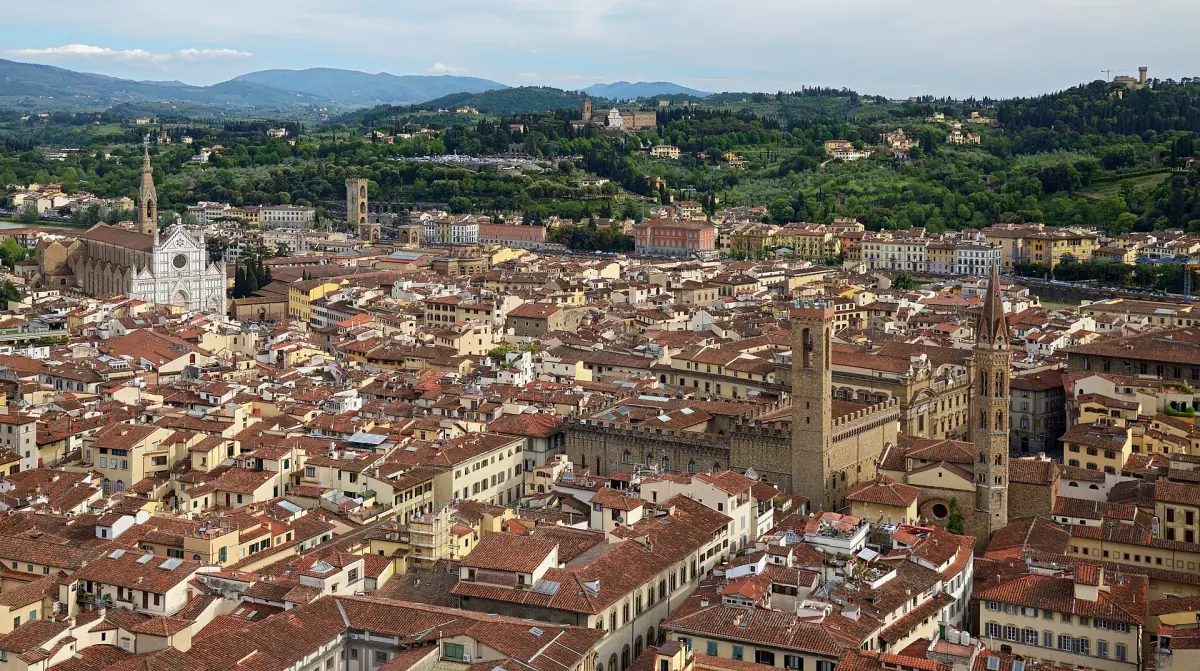
Nearly 370 years on the square
From the unveiling to the move indoors.
The statue stood in front of the Palazzo Vecchio from 1504 until 1873. During unrest in 1527 the left arm is said to have broken into three pieces. In 1873 the statue was taken from the Piazza della Signoria to the Accademia to protect it from the weather.
A copy now stands where the original once did, so the square still has a David. Our page on the David replicas in Florence shows where to find it and the bronze copy on the Piazzale Michelangelo.
The Accademia and the Tribuna, 1873 and after
A new home, built around the statue.
In 1873 the David moved into the Accademia. The Tribuna, the hall that holds it today, was built for the statue. It was designed by Emilio De Fabris and is dated to 1882. The long hall that leads to it holds the unfinished figures known as the Prisoners. They have their own page, Michelangelo's Prisoners.
| Year | What happened |
|---|---|
| 1501 | Order for the statue, for a buttress of the Duomo |
| 1504 | Place chosen on 25 January, statue unveiled on 8 September |
| 1527 | Left arm said to have broken in three pieces during unrest |
| 1873 | Moved from the Piazza della Signoria to the Accademia |
| 1882 | Tribuna, the hall built for the statue, opens |
| 2003 to 2004 | The surface is cleaned |
For most readers, the key date is 1873. It marks the end of the open-air years and the start of the museum years, and it explains why the original is now inside and the copies are outside.
Care and research since the cleaning
What is known about the statue's condition.
The 2003 to 2004 cleaning
The surface was cleaned in 2003 and 2004. The wreath, the tree stump and the sling were originally gilded, and that detail is part of how the statue was first seen.
Dusting and monitoring
Today the care is routine: the marble is dusted at regular intervals and monitored.
Research on the lower legs
A study published in 2014 described tiny cracks at the left ankle and the right support stump, known since the 19th century, and tested the effect of the statue's tilt on models. It describes that research, not the statue's condition today, and it does not mean a closure.
His other works in the city, including the Medici Chapels and the Bargello, are covered in the Michelangelo in Florence guide.
Michelangelo's David history: frequently asked questions
When was Michelangelo's David made?
The work was ordered on 16 August 1501 and the statue was shown to the public on 8 September 1504. The carving took place from 1501 to 1504.
Why was the David moved to the Accademia?
In 1873 it was moved from the Piazza della Signoria to protect it from the weather. It had stood outdoors since 1504.
Was the David made for the cathedral?
It was ordered for an outer buttress of the Duomo. A committee decided on 25 January 1504 to place it in front of the Palazzo Vecchio instead.
When did the Tribuna open?
The Tribuna was built for the statue and is dated to 1882. The move of the statue itself was in 1873, so do not mix the two years up.
Was the David ever damaged?
The left arm is said to have broken into three pieces in the unrest of 1527. The surface was cleaned in 2003 and 2004.
Is this the official site of the Accademia?
No. This is an independent history guide and is not run by the museum or by a ticket seller.